Kilojoule Menu Labelling in Australia: Digital Menu Boards for Compliance
Imagine a new seasonal burger going on sale across 60 stores on Monday. Prices are set, the artwork is approved, and everything looks ready to go. There’s just one problem: the kilojoule figure is missing from the drive-thru board in a handful of locations. For a large food chain, that small gap is a compliance issue, not just a design oversight.
Kilojoule menu labelling in Australia requires many chain food outlets to show energy content next to their menu items. And when menus change regularly, keeping traditional printed boards accurate can become a real headache.
That's where digital menu boards can make life easier. In this article, we'll look at the main labelling rules, how they apply to digital menu boards, and what multi-site operators should look for in a system that keeps every location accurate and up to date.
What Is Kilojoule Menu Labelling?
You've probably noticed those little kJ numbers sitting next to burgers, coffees and other menu items at your favourite food outlets. They're there for a reason!
Kilojoule menu labelling helps customers understand how much energy is in their food, making it easier to compare options before ordering.
In NSW, certain food businesses must display the average energy content of their standard menu items in kilojoules (kJ). They must also include the statement: 'The average adult daily energy intake is 8,700 kJ'.
For businesses, the key is ensuring those kilojoule figures are accurate, easy to see, and kept up to date, just like the prices on the menu.
Where Kilojoule Labelling Laws Apply in Australia
Kilojoule labelling rules aren't quite the same across Australia, so where your business operates makes a difference.
There isn't one national law covering every state and territory. Instead, mandatory menu labelling schemes operate in New South Wales, Victoria, Queensland, South Australia and the Australian Capital Territory.
Western Australia, Tasmania and the Northern Territory don't currently have mandatory requirements, although many national food chains choose to display kilojoule information in these locations anyway.
Kilojoule Labelling Laws in NSW
NSW was the first state to introduce kilojoule menu labelling, through a scheme now known as Fast Choices.
The rules apply to 'standard food outlets' with 20 or more locations in NSW or 50 or more locations across Australia.
And it's not just the big fast-food chains that need to pay attention. The rules cover a wide range of businesses, including pizza shops, cafés, bakeries, doughnut stores, beverage and salad chains, and supermarkets.
Kilojoule Labelling in Queensland
Queensland has its own Fast Choices scheme under the Food Act 2006, with rules similar to those in NSW.
There's one particularly important detail for franchise businesses. According to Queensland Health's guidance, the franchisee operating the outlet is ultimately responsible for complying with the rules and can be penalised if something isn't right.
This makes it especially important for franchisors and franchisees to work together to keep menu information accurate and consistent across every location.
Of course, the finer details can vary between states and territories. If your business operates across Australia, it's worth checking the latest guidance from each relevant regulator rather than assuming the same rules apply everywhere.
Menu Board Labelling Requirements: The Practical Details
Having the right kilojoule information is one thing, but displaying it correctly is just as important.
Even when all the figures are accurate, it's surprisingly easy to get caught out by where and how they appear on your menu boards.
Here are the key labelling requirements to keep in mind:
- Definition of a menu: In NSW, a menu can be printed or digital and includes displays accessed through QR codes, self-serve kiosks, apps and webpages, as well as mounted boards whether overhead, on walls, counters or digital frames.
- Font size: Guidance in the ACT states that where numerals in the price vary in size, the kJ figure must be at least the same size as the largest numeral in the price.
- Timing on rotating screens: Queensland's guidance expects kilojoule content to appear in the same font size and colour, and at the same time, as the name of the item. A slide that shows the price first and the kilojoules later is a risk.
- Posters are not substitutes: ACT guidance is clear that wall posters cannot replace menus for meeting the requirements.
- Trial items: In NSW, outlets trialling new products at no more than 5 stores for no more than 60 consecutive days do not need to display kJ information for those items. The ACT does not offer this exemption.
Why Digital Menu Boards Make Compliance Easier
Now that we've covered the kilojoule labelling rules and how information needs to be displayed, there's one more thing to consider: how do you keep everything accurate when menus are constantly changing?
With traditional printed menus, even a small update can turn into a big job. Every price change, recipe tweak or new product means reprinting, shipping and installing new panels, then hoping every store gets it right.
This is where digital menu boards step in, offering a much simpler way to manage these changes and helping food businesses across Australia reduce compliance risks in several ways.
One Update, Every Location
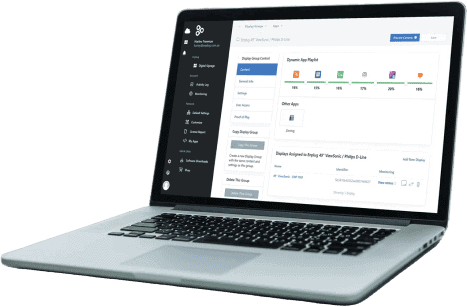
There’s no need to update your screens one at a time by visiting each location. With cloud-based management, the head office can update menu prices across locations at once, along with the kilojoule values that sit beside them.
If a supplier change affects the energy content of a product, the new figure can go live across the network without waiting on print runs.
Templates That Lock in the Rules
Confused about font sizes, positioning and all those display requirements we spoke about above?
A well-designed template can take the guesswork out of it. By locking in the correct position, font and size of kilojoule figures alongside prices, you can keep everything consistent across your menu boards. Staff can still add specials or remove sold-out items without accidentally shrinking the kJ figures or leaving out the reference statement.
Good layout principles still matter here, and the approach to designing a digital menu board that is easy to read will also help with compliance.
Controlled Scheduling
Switching from breakfast to lunch or late-night menus? Digital menu boards can handle it automatically.
Each menu can have its own compliant layout, with the right items and kilojoule values appearing at the right time of day.
No manual changes needed, and no risk of accidentally displaying yesterday's breakfast menu at lunchtime.
Compliance Across QSR, Drive-Thru and Cafe Chains
Not all food outlets operate the same way, and neither do their menu boards. From busy quick-service restaurants to drive-thrus and café chains, each setting comes with its own challenges when it comes to keeping kilojoule information accurate, visible and up to date.
QSR digital menu boards often have dense menus with combos and size options. Showing kilojoules for each size clearly, without cluttering the board, requires careful layout planning.
A drive-thru digital menu board in Australia needs to be readable from a vehicle in varying light. Screen brightness, contrast and font size affect whether kJ figures are genuinely legible, not just technically present.
Cafe chain digital menu boards tend to deal with many drink variations. Grouping similar items and showing kJ values per size keeps things clear. Menus that compete for attention with promotions can also be tuned to drive more orders while still displaying the required information.
Choosing Menu Board Software for Franchises
Managing menu boards across multiple franchise locations can be a juggling act. Head office needs to keep branding, pricing and compliance information consistent, while individual stores need the flexibility to make changes that suit their location.
The right digital menu board software can make both possible, without creating extra work for everyone involved.
So, what should you look for when comparing your options?
- Role-based permissions, so head office controls compliance fields while stores manage approved local content.
- Group-based publishing, to push changes by state, region or store format.
- Locked templates for kilojoule placement and the reference statement.
- Scheduling and dayparting for menu changes by time of day.
- Screen status monitoring, so you know when a display is offline or showing outdated content.
- Reliable support for stores without on-site technical staff.
Asking the right questions early helps, and the checklist for finding the best digital menu software is a practical starting point.
How Enplug Supports Restaurant Digital Signage in Australia
Enplug provides cloud-based restaurant digital signage in Australia, used by cafes, quick service restaurants and multi-site food brands. Teams can manage menu boards across locations from one dashboard, schedule dayparts and update pricing and item details centrally. Franchise groups can also use the same screens for promotions and local marketing, as covered in these fast casual franchise marketing ideas. More detail on menu board features for food businesses is on Enplug's restaurant digital signage page.
Final Thoughts
Keeping up with kilojoule menu labelling requirements doesn't have to be complicated. Ultimately, it's about getting the right information in front of customers – the correct kilojoule figure, displayed clearly alongside the right menu item, at every location.
For busy food chains with constantly changing menus, digital menu boards can take much of the hassle out of staying compliant. Rather than juggling printed updates across multiple stores, businesses can manage their menu information centrally and keep everything consistent.
A good place to start? Review your existing menu boards against the requirements in each state where you operate. Then consider whether your current system makes it easy to update, manage and lock in kilojoule information across all your locations. A little planning now can save plenty of headaches down the track!
Frequently Asked Questions
Do small independent cafes need to display kilojoules?
Generally no. The mandatory schemes target chains that meet location thresholds, such as 20 or more outlets in NSW or 50 or more nationally. Businesses that display kJ values voluntarily in NSW must follow the same display rules.
Can kilojoule information rotate on a digital menu screen?
It can appear on rotating content, but guidance such as Queensland's expects kJ values to be shown at the same time as the item name and price, not on a separate slide.
Do online menus and apps need kilojoule labelling?
In NSW, the definition of a menu includes digital formats such as apps, webpages, QR code menus and self-serve kiosks, so these are generally covered.
Who is responsible for compliance in a franchise?
Under Queensland's guidance, the franchisee operating the outlet is responsible, although regulators may work with the franchisor to fix wider issues.
on November 3, 2026 3:54 am